Enter password to view project
ART19: Inventory Management & Forecasting
A forecasting and availability system to surface real-time ad inventory opportunities within a complex dynamic insertion model.
Role
UX/UI Designer
Industry
Ad tech
Duration
4 months
Product Background
ART19, a podcast hosting and ad tech platform, powered revenue through dynamic ad insertion, serving targeted ads to listeners across thousands of podcast episodes.
Problem
Podcast ad sellers lacked visibility into how much of their available inventory was sold versus unsold, making it difficult to identify revenue opportunities.
Meanwhile, Ad Ops teams had no early warning when campaigns were oversold, risking underdelivery and strained advertiser relationships.
As a result, publishers either left revenue on the table or jeopardized contracts due to poor forecasting and inventory management.
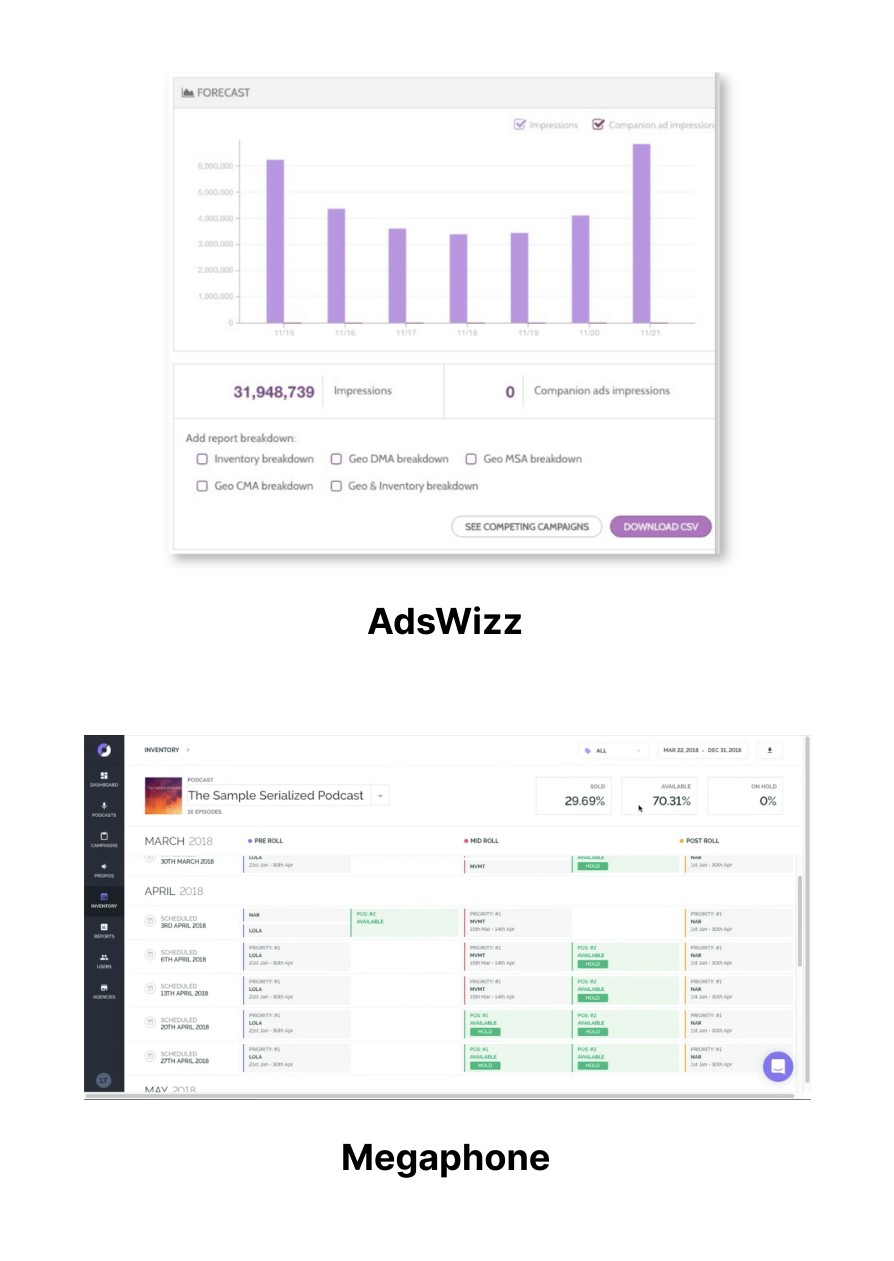
Solution and Initial Design Ideas
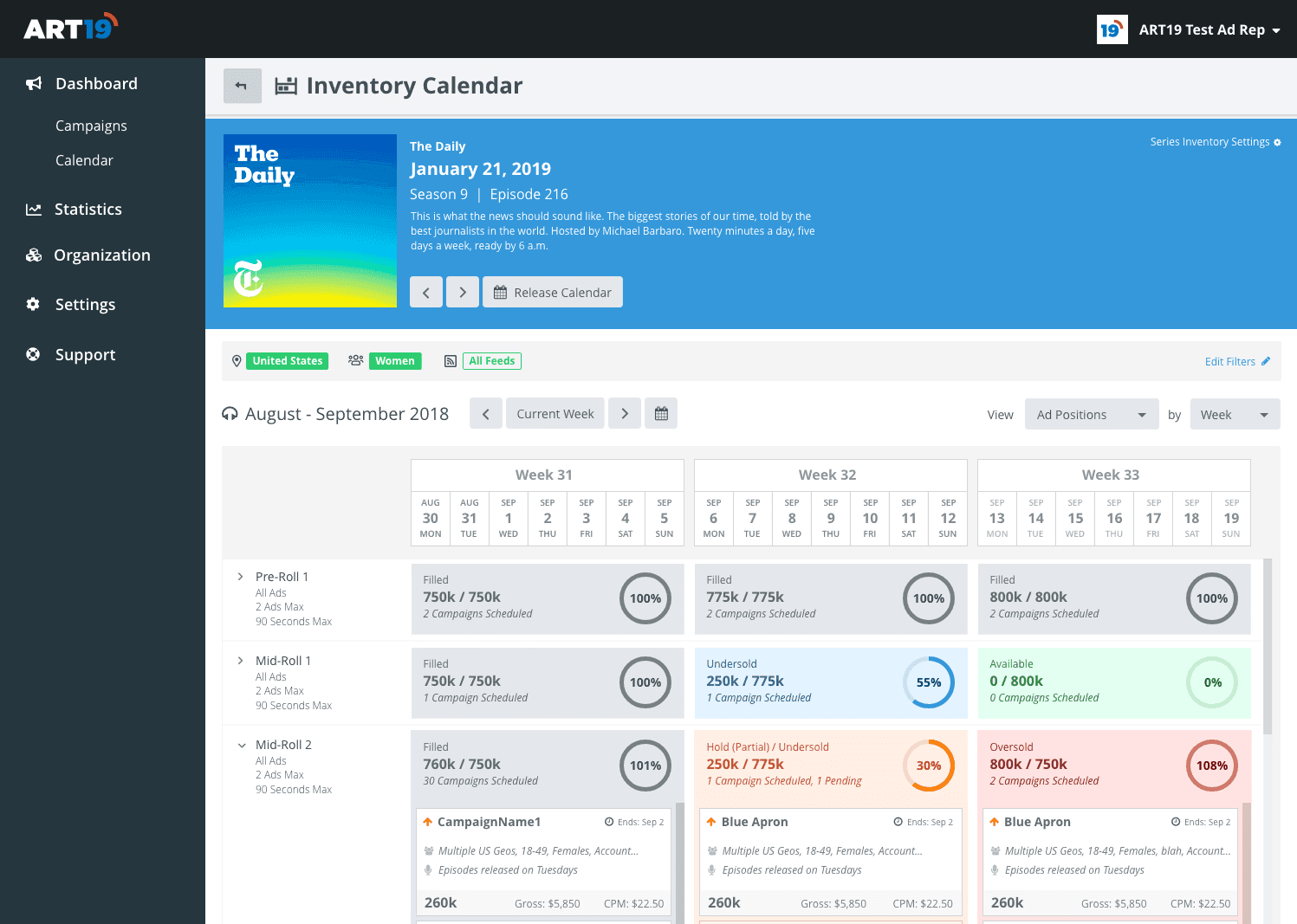
Our initial concept was a high-density calendar that categorized inventory into four states: filled, undersold, partially filled, and oversold. We used distinct colors to differentiate states and emphasized show branding to ground users in content context.
However, usability testing revealed that too many bright visual states increased cognitive load and made it harder to answer the primary question: Where do I still have availability?
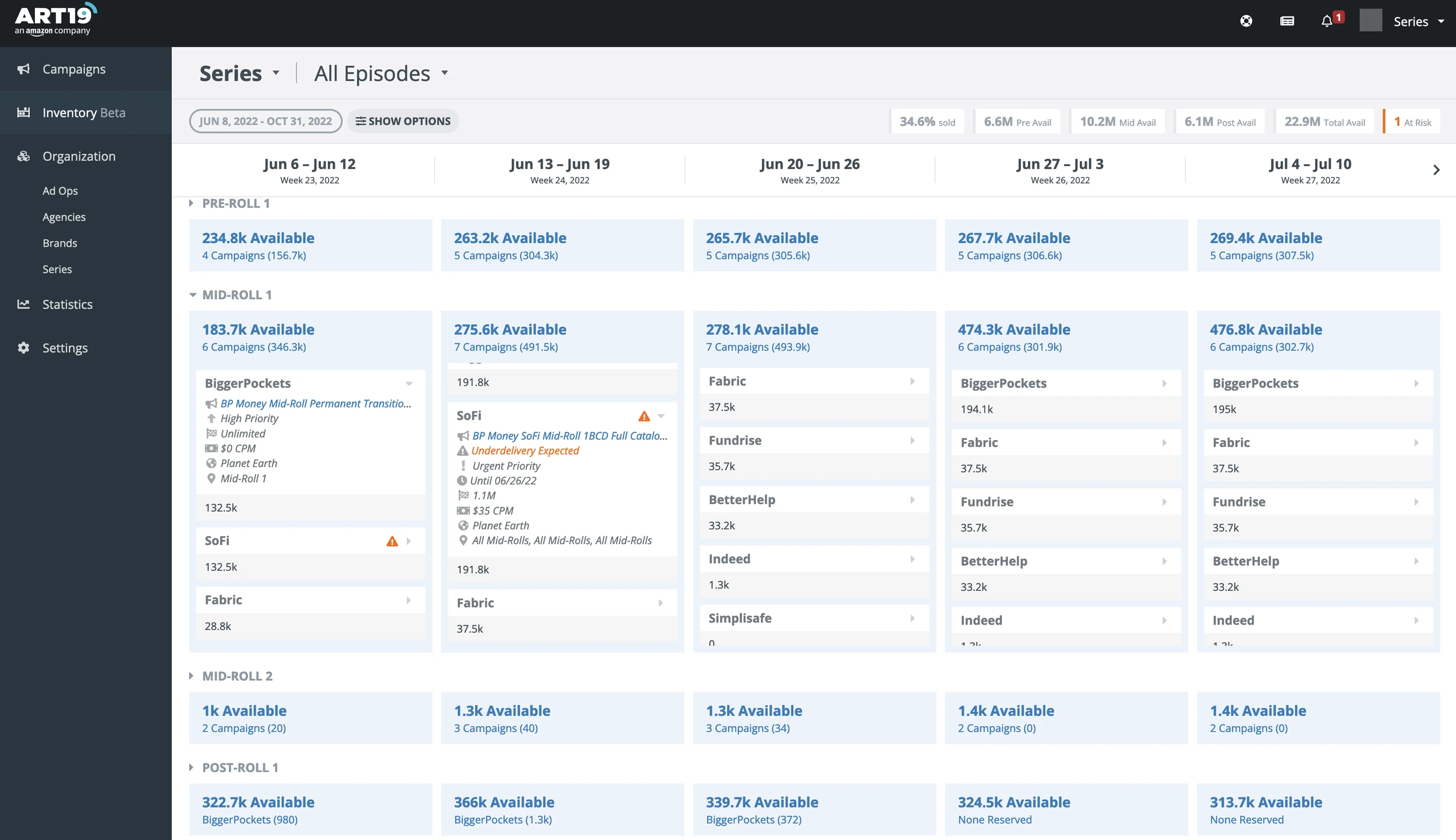
High-Fi Mocks
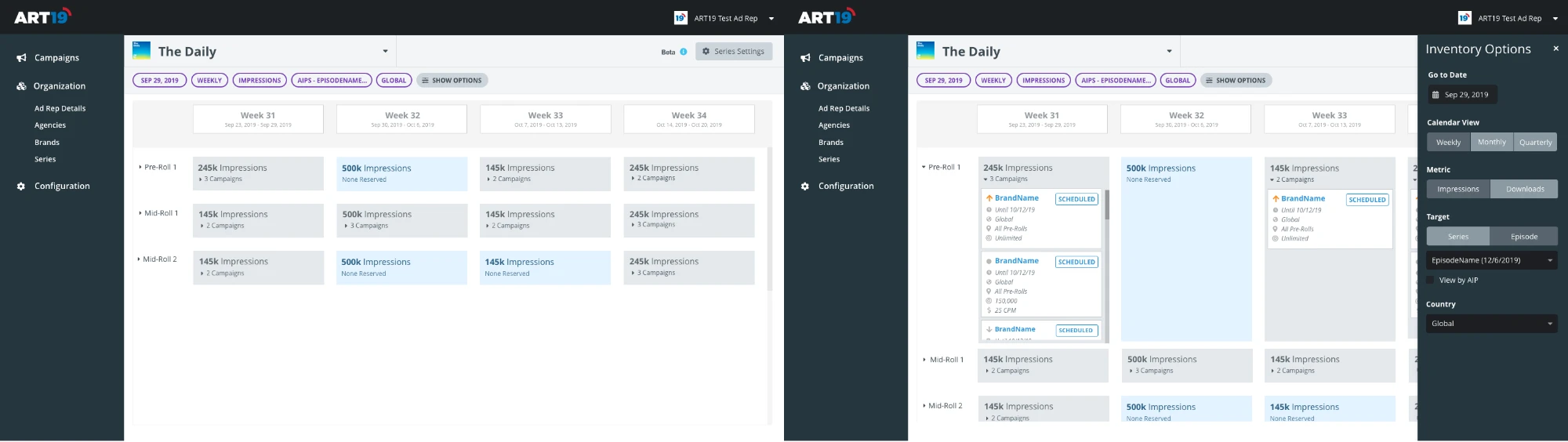
To support forward planning, we introduced a system for creating planned episodes with projected download estimates. Users could define default ad slot counts that automatically updated post-release, aligning inventory forecasting with real-world performance.
With this in mind, we reduced the color palette and simplified each calendar cell to surface only the most decision-critical information. Available inventory was visually prioritized, allowing users to scan for opportunity without drilling into campaign detail.
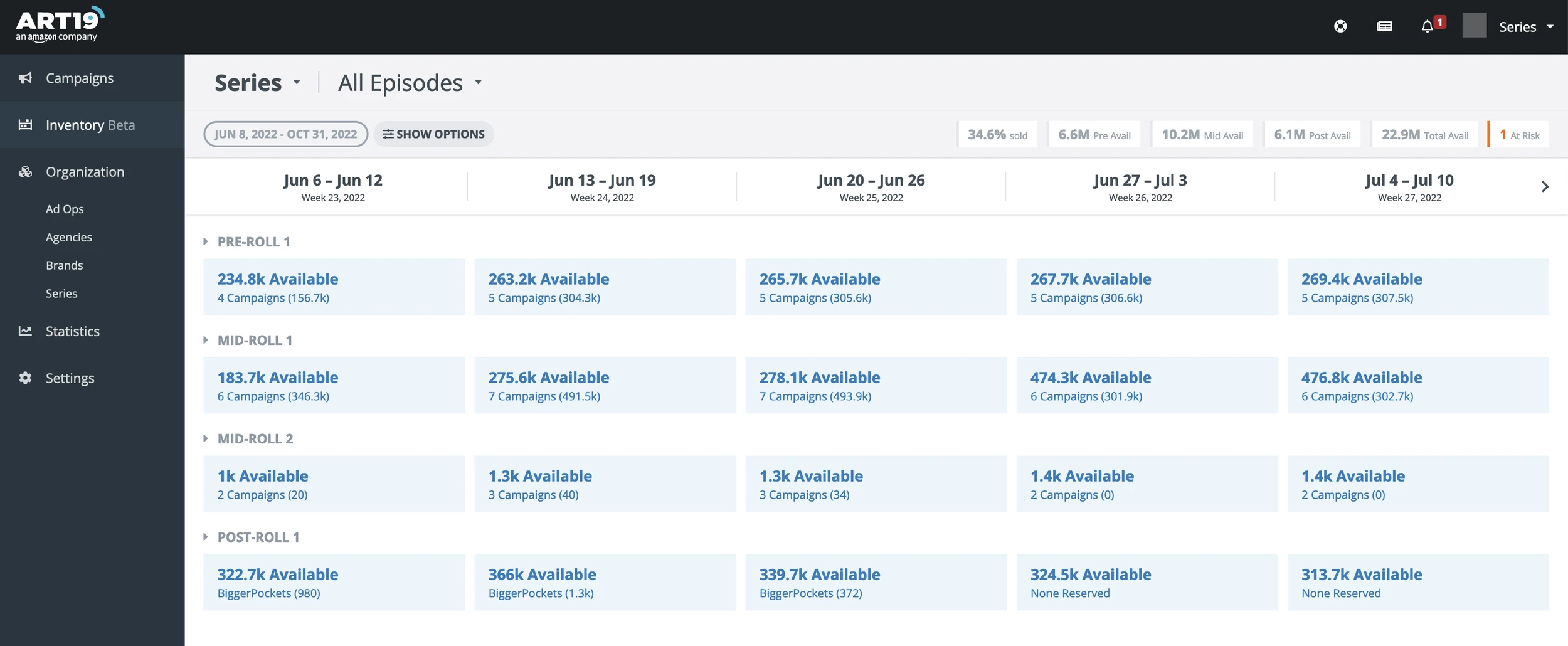
Launch, Results & Learnings
The project shipped on schedule and satisfied the contractual requirement from a marquee customer. However, adoption was mixed. While one large publisher integrated it into their daily workflow, the requesting customer ultimately did not adopt it.
The core issue became clear post-launch: inventory data was not updated in real time. As a result, users could not confidently answer their most urgent question — “Can I book this campaign right now?” Because the tool didn’t support that decision at the moment of need, its perceived value diminished.
My takeaway from this project is always stick to an MVP. We started from what we wanted to build, then pitched that vision to customers. That left us less wiggle room when it came to actually building the product, ultimately leading us to our biggest issue, the limited calendar updates. In future projects, I know to first prioritize shipping the narrowest version that answers the most important question.
Other projects

Amazon SageMaker Unified Studio: Administration Portal
Allowing adminstrators enterprise control over their company's product usage.

Amazon SageMaker Unified Studio: Quick Setup
Simplifying on-boarding to improve user uptake

Amazon DataZone: Access Control
Fine-grained data permissioning to let publishers securely share partial datasets without creating redundant assets.